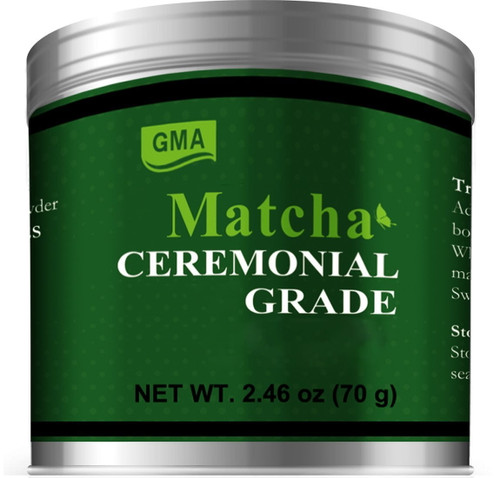
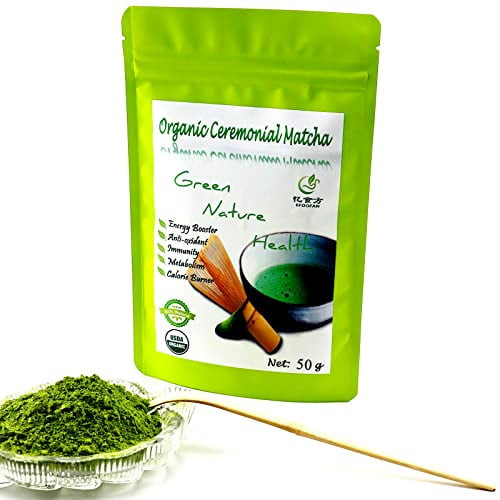
Pantenger Matcha Ceremonial Grade is the highest grade of matcha available in Japan and is used for the Japanese Tea Ceremony. It is organically grown in Kagoshima Prefecture by a ninth-generation family-owned tea estate that has accumulated over 250 years of artisan expertise.
Ingredients: Japanese Organic Matcha Green Tea
USDA Organic certified by OTCO
Kosher certified by OU.
Non-GMO
Gluten Free
Vegan
The tea leaves are grown under shade for three weeks before the first flush of spring, leaves are hand-picked, then powdered using traditional granite stone mills. The First Flush of Spring is the first harvest of the year, and the leaves contain three times more L-theanine than the second or summer harvest. Pantenger Matcha contains high levels of antioxidants and amino acids.
The 20 days of shade force the plant to overproduce chlorophyll, which is what makes the tea a vibrant emerald green. Low-quality matcha is pale and yellowish. Pantenger Matcha is milled using granite stone mills. The result is a silky texture.
The L-theanine produced by an excess of chlorophyll gives Pantenger Matcha a sweet taste and aroma of fresh grass. Low-quality matcha tends to be bitter and astringent.
What are the signs of a good quality matcha?
There are five key ways to determine the highest quality of matcha:
Origin: Japan.
Method: tea leaves grown under shade for three weeks before the first flush of spring, leaves are hand picked, veins are removed, then powdered using traditional granite stone mills.
Color: the 20 days of shade force the plant to overproduce chlorophyll, which is what makes the tea a vibrant emerald green. Low quality matcha is pale and yellowish.
Texture: matcha is milled using granite stone mills. The result is a silky texture, with an average particle size of 10 microns (0.01 mm).
Taste: the L-theanine produced by an excess of chlorophyll gives the matcha a sweet taste and aroma of fresh grass. Low quality matcha tends to be bitter and astringent.
Ingredients: Japanese Organic Matcha Green Tea
USDA Organic certified by OTCO
Kosher certified by OU.
Non-GMO
Gluten Free
Vegan
The tea leaves are grown under shade for three weeks before the first flush of spring, leaves are hand-picked, then powdered using traditional granite stone mills. The First Flush of Spring is the first harvest of the year, and the leaves contain three times more L-theanine than the second or summer harvest. Pantenger Matcha contains high levels of antioxidants and amino acids.
The 20 days of shade force the plant to overproduce chlorophyll, which is what makes the tea a vibrant emerald green. Low-quality matcha is pale and yellowish. Pantenger Matcha is milled using granite stone mills. The result is a silky texture.
The L-theanine produced by an excess of chlorophyll gives Pantenger Matcha a sweet taste and aroma of fresh grass. Low-quality matcha tends to be bitter and astringent.
What are the signs of a good quality matcha?
There are five key ways to determine the highest quality of matcha:
Origin: Japan.
Method: tea leaves grown under shade for three weeks before the first flush of spring, leaves are hand picked, veins are removed, then powdered using traditional granite stone mills.
Color: the 20 days of shade force the plant to overproduce chlorophyll, which is what makes the tea a vibrant emerald green. Low quality matcha is pale and yellowish.
Texture: matcha is milled using granite stone mills. The result is a silky texture, with an average particle size of 10 microns (0.01 mm).
Taste: the L-theanine produced by an excess of chlorophyll gives the matcha a sweet taste and aroma of fresh grass. Low quality matcha tends to be bitter and astringent.